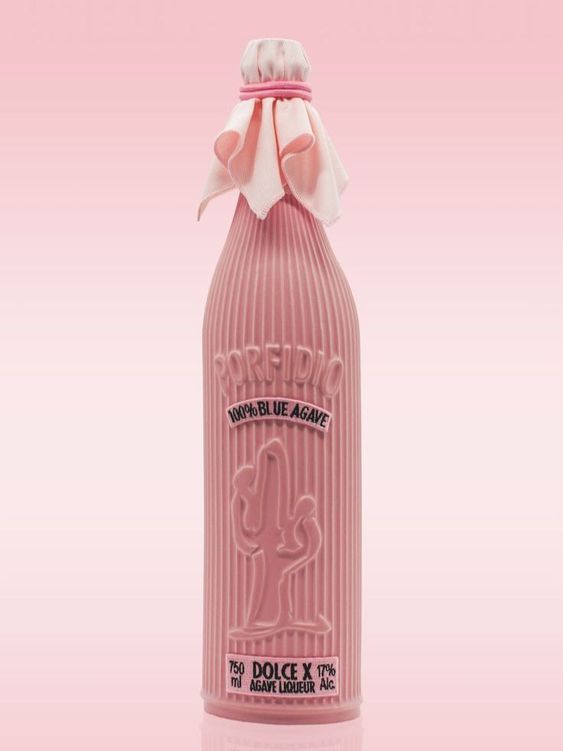
Description:
PERSPECTIVE Madame de Pompadour, the mistress to French Sun King Louis XV, inspired a stylistic homage from us, Porfidio Dolce.X. With her patron's unlimited purse behind her, Mme de Pompadour became a promoter of novel aesthetic values in architecture and interior design at the Royal Court, and design historians attribute the fashion for the color pink to her efforts, not only in clothing but also in porcelain, wallpaper designs, and tableware. At that time, pink was technically the most difficult and expensive color to produce in any medium, so elitist by definition. But even today, pink continues to be the most expensive color in glass making, since its production still depends on real gold powder. Pompadour's aesthetic influence over the era meant that during the ensuing French Revolution, her pink became known as 'Rose Pompadour'' and symbolized the values of the aristocracy in opposition to those of the bourgeoisie, the incoming rulers. So the revolutionaries declared pink decadent, emblematic of the sybaritic values of aristocratic parasites. In this, the revolutionaries were probably influenced by France's Calvinist Huguenots who went for austere black fashion. From Louis XV until Hitler, pink had been deemed gender neutral, worn by men and women regardless, but Adolf had the pernicious idea of equating it with homosexuality by tagging convicted gay prisoners in the camps with pink badges, his version of The Scarlet Letter. Hitler's color ideology, unfortunately, outlasted him, and merged with and reinforced the general Calvinist color prejudice against the color. The West's moralistic aversion to pink continued until the early 1980s when the color was "rediscovered' by a cultural outsider (from a Western perspective) and style revolutionary, Rei Kawakubo, one of Japan's three world-aesthetics-transforming fashionistas. Through his pink masterpieces and influence over European haute couture, in particular, on Dior and Lacroix, Kawakubo mitigated the West's prejudices against the color. So, the Buddhist broke the Calvinist/Nazi color taboo in the West, and showed that pink can simply be pleasantly aesthetic, its original intent, while a-political, a-cultural, and unisex in its intentions. Getting to our point, Porfidio's Dolce.X is a homage. Not to America's plastic Barbie cult, pink's infantile plagiarizer, nor to Japan's teen kawaii culture, nor even a contrarian retrospective run against Calvin and Hitler, but rather to Madame de Pompadour and Rei Kawakubo, and their essential contributions to the joy of beauty and aesthetics. For a hint of extra provocation, Dolce X is decorated with hand-embroidered silk labels, made by the same artisans who embellish La Perla's and Victoria's Secret's bras. While Porfidio Dolce.X is loved by the educated aesthetics in the West for its temerity in deploying the color for an adult drink, it is also reviled by others, like the Bible Belt Christian Calvinist descendants, who near enough to accuse Dolce X of promoting pedophilia. In mainstream Protestant America, however, the color pink now mainly evokes 'Breast Cancer Awareness Month,' so Dolce.x's sales in America soar by 500%. for one month each year. Despite our support of the cause, we rather deplore this pathological re-interpretation of pink as an American medical idiocy. But in all of this lies Dolce.x's uniqueness, as it never ever fails to evoke an emotional response, being, like any piece of modern art, deliberately designed to provoke, provoke, and provoke again. PRODUCT FEATURES • Porfidio Dolce.X is technically a fortified agave wine, indeed, the world's first. • Since agave is a vegetable and in some countries, the word wine is restricted to fermented juices from fruits, such as grapes, Dolce X does not always, but depending on the country, legally classify as a 'wine." To bridge the linguistic divide, we legally call Dolce.X a vino de agave, since vino in Mexican-Spanish covers for all types of alcoholic beverages, including wine, while our global use of it communicates the reality that this is, in reality, a wine. • Dolce.X is made like traditional grape wine, but from agave instead of grape, that is then fortified, like a port wine but with agave spirits instead of brandy. Voila, c'est a! • Dolce.X is sweet, hence its name, as the partial fermentation leaves some sweet unfermented juice behind, using the same production techniques as Pineau de Charantes, the French version of Port. So Dolce X targets consumers with a sweet tooth who like Tawny Ports, Pineaux de Charantes or Spaetlaesen. If you do too, we promise that you will fall in love with Dolce X "at first sip"! • However, unlike those sweet wines from grapes, Dolce.X uses the juices of the agave, an inulin plant, so it is sweet despite its low glycemic content and is good for consumption even by type II diabetics. • Dolce.X is made from 100% Blue Agave in all its components, the wine as well as the fortifying spirit. Dolce.X is aged for 7 years in oak barrels previously used to age The Original by Porfidio.